Modi’s Plea for Restraint: A Rare Crack in the Armour of Aspiration
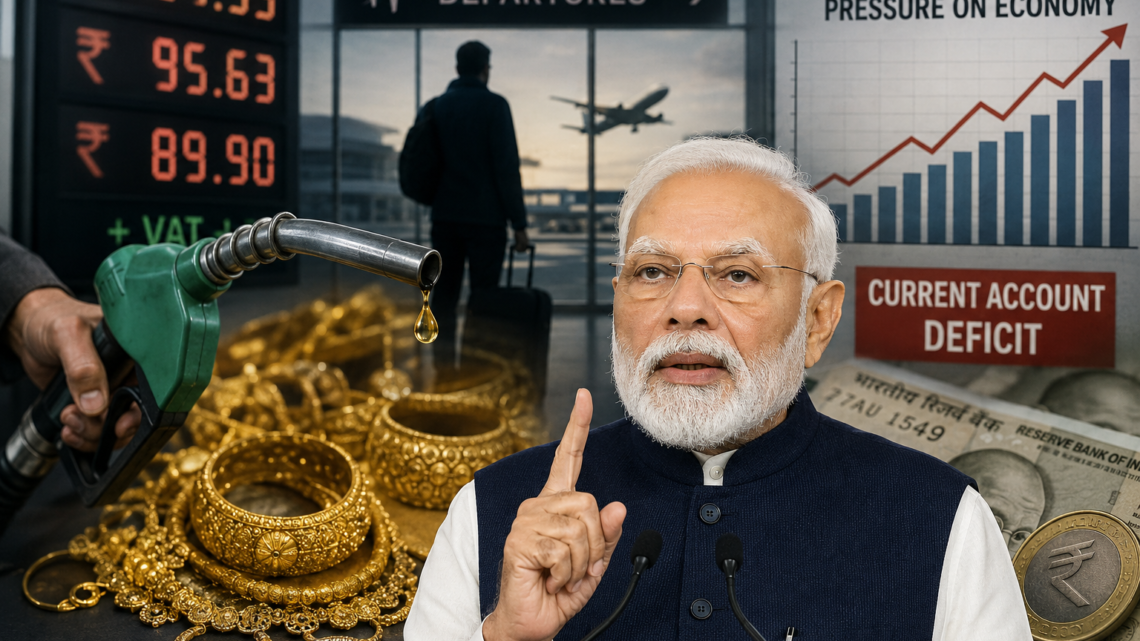
May 13, 2026There was something jarringly un-Indian about Prime Minister Narendra Modi‘s recent appeal to the nation. Not that our leaders haven’t urged sacrifice before—think of Gandhi’s salt marches or the Emergency’s thrift drives. But this wasn’t the chest-thumping rhetoric of triumph that’s defined Modi for a decade: no boasts about overtaking economies, no grand visions of destiny or endless abundance. Instead, a quiet nudge to pull back. Buy less gold. Cut foreign trips. Curb fuel guzzling, hop on public transport and work from home if you can. Put country before consumption.
For a leader who’s embodied middle-class dreams of upward mobility, this tonal shift hits hard. And that’s precisely why it resonates. Beneath the plea lurks a truth the government prefers not to trumpet: India remains perilously exposed to global tempests. Peel away the TV studio swagger and geopolitical bravado, and the picture is fragile—an economy hooked on imported energy (we ship in 85 per cent of our crude), bleeding billions yearly on gold, and banking on external calm to keep domestic fires low.
The spark? West Asia’s unrest is spiking oil prices via the Strait of Hormuz choke point. Every barrel-price jump ripples into inflation, truckers’ costs, factory bills, and your grocery run. But it’s not just oil. Gold’s our other Achilles heel, woven into our cultural DNA—not mere metal, but heirloom, security blanket, wedding must-have, emotional bulwark. Families hoard it when markets wobble, not because economists say so, but because grandparents drilled it in: trust gold over fickle banks. Imports have ballooned to tens of billions annually, draining forex reserves just when we need them most.
This appeal isn’t ideology; it’s defence. The PM is roping citizens into macro-management via self-restraint. Smart? Maybe. But will it stick? Indians might skip a Goa holiday or fancy dinner, but ditching gold? That’s like telling Diwali shoppers to skip sweets. Uncertainty historically drives us to jewellery shops, not away. Weddings march on; fear fuels frenzy.
Opposition voices like Rahul Gandhi smell blood, slamming the government for not fortifying the economy against these storms. The BJP brushes it off as politicking, but the critique bites: could we have done better? Uncomfortably, yes—in part. Credit where due: roads and rails have mushroomed, electricity reaches villages, UPI’s revolutionised payments, and we dodged post-pandemic inflation better than the West. Yet vulnerabilities fester. “Atmanirbhar” sounds fierce, but we still import most energy. “Make in India” sparked logos and events, not an export juggernaut. Reforms in EVs, solar and ethanol blending picked up pace, but not fast enough for our scale. Cheap global oil bought time; we didn’t fully cash it in.
That’s why Modi’s words feel both prudent and unnerving. Prudent: owning reality before crisis bites. Unnerving: leaders don’t preach belt-tightening unless they scent prolonged pain. Democracies thrive on consumption—subsidies, stimulus, “spend to grow.” Modi’s injecting discipline, instead, a political gamble. Foes are spinning it as a confession of economic mismanagement after years of hype. Fair point: why burden households with behavioural fixes when structural sins linger?
Yet dismissing it as mere austerity would be myopic. Sometimes, nations need collective caution over boosterish bluster. This feels like pre-emptive psy-ops: steeling us for a world of pricier energy, snarled supply chains, and resurgent nationalism. Confidence is at stake—if panic sets in (rupee wobbles, prices soar, jobs teeter), spending freezes, investments flee and anxiety snowballs.
For all our emergence talk, Modi’s reminder stings: India’s still fragile enough that your gold bangle or overseas jaunt can sway national fortunes. In these choppy times, that vulnerability demands not just government fixes, but a shared reckoning.
We welcome your comments at letters@friedeye.com