
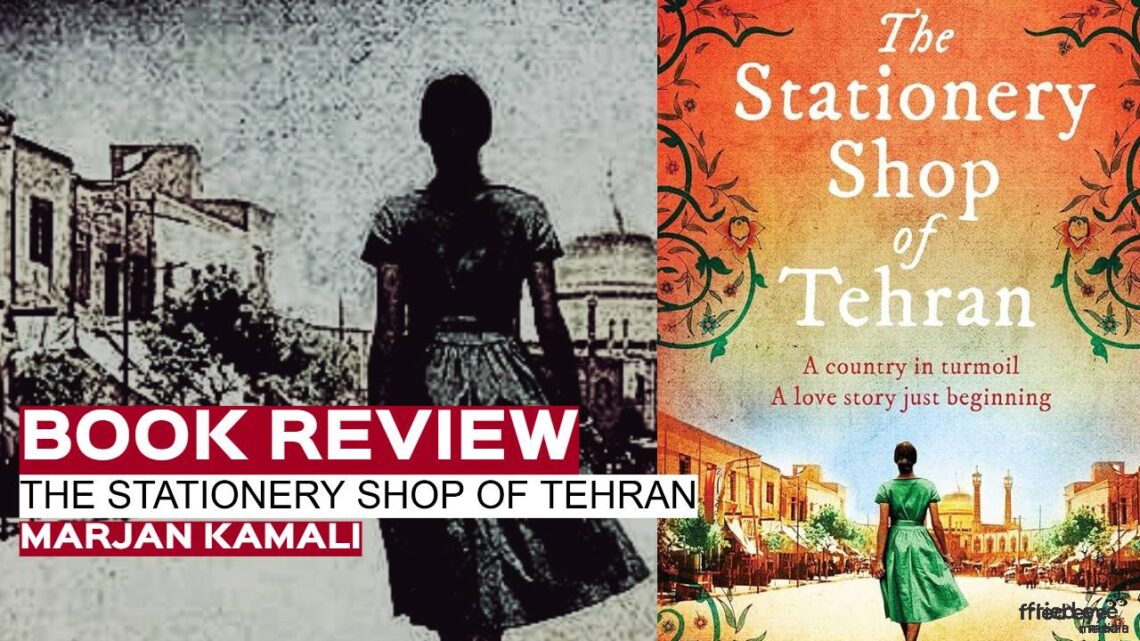
Book Review: The Stationery Shop of Tehran by Marjan Kamali
July 19, 2025It’s not often that a book brings you to the brink of tears. I think that best sums up The Stationery Shop of Tehran by Marjan Kamali —perhaps more so than anything that may follow in this attempt at a review.
Kamali takes us straight into the tumultuous Tehran of 1953, amidst a political upheaval triggered by the United States to replace democracy in the country. Here we meet families looking forward to bright futures with their loved ones. While much of what follows isn’t a direct result of the political turmoil, the country’s politics and people’s aspirations undeniably shape the course of events. And that’s precisely what defines The Stationery Shop of Tehran—where the personal and political intertwine.
Roya is a young, obedient, 17-year-old Iranian girl who adores poetry, stationery, and her family. The future isn’t something she’s thought much about, except for her father’s wish that she become a scientist—a modern woman for a new Iran. Everything changes when she falls hopelessly in love with Bahman, a passionate idealist who sees the world through the lens of politics and future revolutions. In Roya and Bahman, we find two extremes—drawn together by love. Their relationship blossoms in the stationery shop run by Mr Fakhri, whose quiet guidance proves more crucial than it first appears. And, as always, fate intervenes.
Marjan Kamali’s style is steeped in emotional nuance, using internal landscapes to set the stage for what’s to come. The story begins in New England, USA. Roya, now 77, is visiting a nursing home with her husband—seeking answers to a question that has haunted her for decades. The narrative then takes us 60 years into the past to uncover what went wrong and why those answers matter so deeply. We learn early on that Roya and Bahman’s love didn’t culminate in a fairy-tale ending. The rest of the novel gently unspools the reasons behind their separation.
Kamali’s narration kept me engaged through all 300-something pages. Still, the cynic in me couldn’t help but question whether such deep, enduring love is truly possible for a teenager. Can love remain not just alive, but unwavering, through decades of separation and life’s inevitable turns? It feels a little too romanticised—perhaps even contrived. Or maybe it’s simply a reflection of a different time. Either way, the key is to accept Roya and Bahman as they are, within the world Kamali creates.
What Kamali does brilliantly is characterisation. She doesn’t just slot people into the plot; she breathes life into them. While she excels with the central figures—Mr Fakhri, Bahman’s formidable mother Badri Aslan, and the unforgettable Zari—she also gives surprising depth to seemingly minor characters like Claire the nurse. However, one character feels a touch underdeveloped: Walter, Roya’s husband. He functions more as a plot device than a person. Kamali never fully fleshes him out, and at times he feels like an afterthought.
All in all, I’d recommend this book if you’re in the mood for a poignant, layered love story—with generous spoonfuls of tragedy dispensed like EMIs—and a backdrop of political history. This may not find its way onto a list of “50 books to read before you die,” but it will, at times, make your heart ache. And yes, it will entertain you along the way.
And oh! Beyond Roya and Bahman, the book left me mourning for Iran—a nation so rich in culture and promise, yet wracked by decades of turmoil. But that’s a reflection best saved for another day.
Buy the book on Amazon
We welcome your comments at letters@friedeye.com
